
Local government addressing data centers
County moving on one-year moratorium; city sends issue to committee

This article is brought to you by Silver Birch Living of Kokomo. Silver Birch offers a full spectrum of personalized services to help older adults maintain their independence in a supportive, caring environment. For more information, visit Silver Birch of Kokomo online.

The prospect of a data center coming to Kokomo or Howard County has been an issue that has dominated public discourse for months, and local government is responding to steadily mounting pressure to ban the heavy industrial developments.
The Kokomo Common Council defended itself in February and March from hundreds of angry citizens who opposed the establishment of an industrial park that has been rumored to be the home of a data center project. The industrial park succeeded, but the council relented and agreed to study the issue, as of its meeting on May 11.
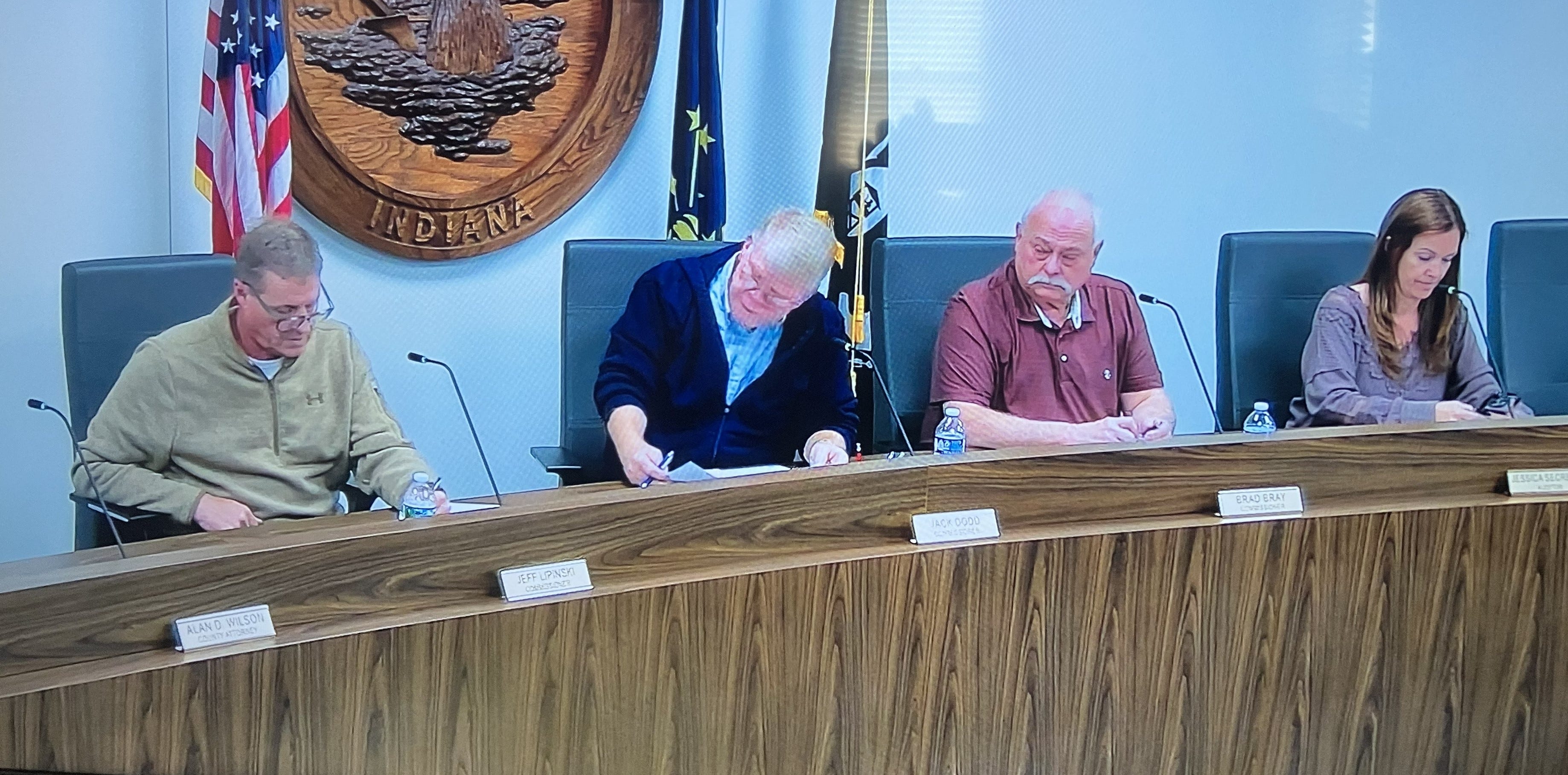
That follows a decision by the Howard County Board of Commissioners on May 4 to pursue an outright moratorium on data centers. At that meeting, County Attorney Alan Wilson submitted a resolution to the board, which would direct the Howard County Plan Commission to initiate proceedings to establish a temporary moratorium on data centers. He explained that the plan commission is the statutory body that addresses zoning issues, which presumably will be examined during the moratorium.
The resolution caused brief confusion for Commissioner Jeff Lipinski, who had requested a resolution for the commissioners to establish a moratorium on April 20. Wilson explained that the matter first must go before the plan commission because it involves a zoning regulation.
“You’ll find some counties have had boards of commissioners that have adopted moratorium on their own without sending it to the planning commission, and you’ll find other counties like Fulton and several others that have used the plan commission procedure like we’re using,” said Wilson. “It’s more proper to do it this way. There are certain circumstances that would allow Board of Commissioners to adopt a moratorium on their own, but I don’t think this meets any of those circumstances.”
Wilson added that the primary circumstance that might allow the commissioners to act without the plan commission would be the imminent application for a data center development, which the county has not received.
Commissioner Jeff Lipinski then questioned the duration of the proposed moratorium.
“The original was going to be six months, which is what we’ve done the past, and then we would renew it in six months,” said Lipinski. “Is this a one-year (moratorium)?”
“This recommends one year, but it’s up to plan commission,” Wilson responded. “That’s still to be decided. The plan commission can recommend whatever period of time they want, up to a year.
“Then, if they recommend adoption of the moratorium to the board of commissioners, you three can decide how long you want it to be.”
Commissioner Jack Dodd added that a public hearing would be held at the plan commission prior to it making a recommendation to the commissioners.
“The public will get a chance to be heard,” Dodd said.
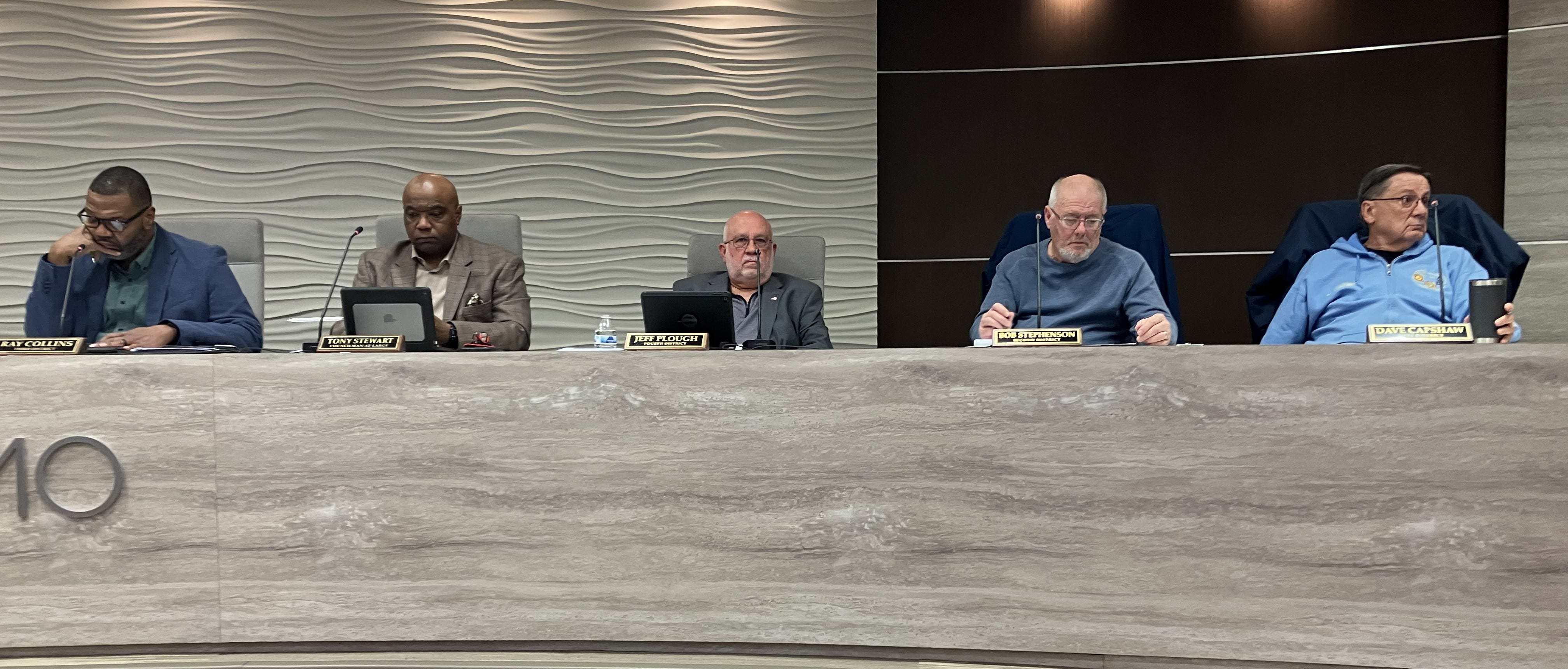
On May 11, the Kokomo Common Council set out a plan to consider a moratorium, though Council President Greg Davis greatly widened the scope of the action. He made the statement in light of Councilman Jeff Plough’s intention to establish a subcommittee to study the issue.
“On April 13, it was announced that a subcommittee was being formed to evaluate a potential moratorium,” said Davis. “What has been decided is we are going to use an existing standing committee of this council. We’re going to use the Public Works and Improvements committee that is chaired by Councilman Jeff Plough and includes Councilwoman Crystal Sanburn and Councilman Dave Capshaw.
“What we’re going to do, I think, is take even a deeper dive on the guidelines that are established by the Planning Commission.”
Davis disclosed that Plough has contacted other communities about the data center issue to determine what guidelines have been established. That information will be used to help guide the council’s course of action on the matter.
“We think it’s better to establish the groundwork no matter what (heavy industrial) business may come in, instead of focusing on one,” said Davis. “There are any number of (heavy industrial) properties that could come in. We want to make sure that what we have set in place will dictate what we want to be in our city going forward.”
Davis estimated that the committee should have new guidelines developed by August.
“We want to make sure that anybody who comes to the city will have new guidelines that keep us safe and compliant with what’s needed for here,” said Davis.
After the meeting, Plough explained how he sees the committee’s activities unfolding.
“It will be a matter of what the committee decides to focus on,” said Plough. “We’ve already been doing a fair amount of research. I’ve reached out to Indianapolis, and they’re working on putting in some new regulations.
“My hope is that we develop something without having to ‘make a new wheel.’ I’d really like to take advantage of the opportunities and experiences some of the other communities have already put into place.
“I think it’s time to try and figure out a way to make it safe for a community to have new entities come in here that are not going to be a detriment to the environment, to utility bills, and to not have a negative impact on our community.”